
Anúncios
Learning to play piano opens doors to a world of creativity, discipline, and emotional expression that few other activities can match.


The piano is one of the most versatile instruments in music history. Whether you’re drawn to classical compositions, jazz improvisations, or contemporary pop hits, the piano serves as the foundation for understanding music theory and developing technical skills that translate across all musical genres.
Anúncios
Starting your piano journey might feel overwhelming at first, but with the right approach, dedication, and resources, anyone can learn to play beautiful music. This comprehensive guide will walk you through everything you need to know about learning piano, from choosing your first instrument to mastering advanced techniques.
Why Learning Piano Changes Your Life 🌟
The benefits of learning piano extend far beyond simply playing music. Scientific research has consistently shown that piano practice enhances cognitive function, improves memory, and increases neural connectivity in the brain. When you learn piano, you’re simultaneously exercising both hemispheres of your brain, creating new pathways that enhance overall mental performance.
Anúncios
Piano playing also develops exceptional hand-eye coordination and fine motor skills. The independent movement of both hands, combined with reading sheet music and listening to the sounds you produce, creates a multitasking challenge that strengthens your ability to process multiple streams of information simultaneously.
From an emotional perspective, piano provides a healthy outlet for stress relief and self-expression. Many players describe entering a meditative state while practicing, where worries fade away and focus becomes singular. This mindfulness aspect contributes significantly to mental health and emotional well-being.
Choosing Your First Piano or Keyboard 🎹
Selecting the right instrument represents your first crucial decision as a beginner pianist. You’ll need to choose between acoustic pianos and digital keyboards, each offering distinct advantages depending on your circumstances, budget, and goals.
Acoustic Pianos: Traditional Excellence
Acoustic pianos produce sound through hammers striking strings, creating rich, organic tones that digital instruments struggle to replicate perfectly. Grand pianos and upright pianos fall into this category, with grand pianos offering superior sound quality and touch sensitivity.
However, acoustic pianos require regular tuning, climate control considerations, and significant space. They’re also substantially more expensive than digital alternatives, with quality upright pianos starting around $3,000 and grand pianos ranging from $10,000 to well over $100,000 for professional instruments.
Digital Keyboards: Modern Convenience
Digital pianos and keyboards offer practical advantages for beginners. They never require tuning, include headphone jacks for silent practice, and often feature built-in learning tools, metronomes, and various sound options. Portability makes them ideal for small living spaces or frequent moves.
When selecting a digital piano, prioritize weighted keys that simulate acoustic piano resistance. This feature, called “hammer action,” ensures that skills developed on your digital instrument will transfer seamlessly to acoustic pianos. Look for 88-key models to access the full range of piano repertoire.
Quality entry-level digital pianos start around $500, with intermediate models ranging from $1,000 to $2,500. Popular brands include Yamaha, Casio, Roland, and Kawai, all offering reliable instruments with excellent touch sensitivity and sound quality.
Essential Piano Fundamentals Every Beginner Must Know ✋
Before playing your first song, understanding basic piano fundamentals sets the foundation for rapid progress and prevents developing bad habits that become difficult to correct later.
Proper Posture and Hand Position
Correct posture prevents physical strain and enables fluid movement across the keyboard. Sit at the center of the piano with your bench positioned so your elbows form a slightly obtuse angle when your fingers rest on the keys. Your feet should rest flat on the floor, providing stability.
Hand position is equally critical. Curve your fingers gently, as if holding a small ball, with fingertips making contact with the keys. Keep your wrists level with your forearms, avoiding excessive upward or downward angles that create tension.
Understanding Piano Keys and Notes
The piano keyboard follows a repeating pattern of white and black keys. Each group of twelve keys (seven white, five black) represents an octave. The white keys correspond to natural notes (C, D, E, F, G, A, B), while black keys represent sharps and flats.
Finding middle C provides your reference point on the keyboard. On an 88-key piano, middle C sits near the center, typically marked by the brand name. From this anchor point, you can navigate the entire keyboard by understanding the repeating octave pattern.

Reading Sheet Music: Your Musical Language 📖
Sheet music serves as the universal language musicians use to communicate musical ideas across time and space. While initially intimidating, learning to read music dramatically expands your repertoire and understanding of music theory.
The Musical Staff and Clefs
Piano music uses a grand staff combining treble and bass clefs. The treble clef (right hand) occupies the upper staff, while the bass clef (left hand) appears on the lower staff. Lines and spaces on these staves represent different pitches, with higher positions indicating higher notes.
Memorizing note positions takes time, but simple mnemonics help. For treble clef lines (bottom to top): “Every Good Boy Does Fine” (E-G-B-D-F). Treble clef spaces spell “FACE.” For bass clef lines: “Good Boys Do Fine Always” (G-B-D-F-A), with spaces remembered as “All Cows Eat Grass” (A-C-E-G).
Rhythm and Time Signatures
Notes have both pitch and duration. Whole notes receive four beats, half notes get two beats, quarter notes receive one beat, and eighth notes get half a beat. Combining these durations creates rhythmic patterns that give music its temporal structure.
Time signatures indicate how many beats each measure contains. The most common time signature, 4/4, means four quarter-note beats per measure. Waltz music typically uses 3/4 time (three quarter-note beats per measure), creating its characteristic flowing rhythm.
Effective Practice Strategies for Rapid Progress 🚀
How you practice matters more than how long you practice. Strategic, focused practice sessions produce better results than mindless repetition, regardless of time invested.
Structure Your Practice Sessions
Divide practice time into focused segments addressing different skills. A balanced 45-minute practice session might include ten minutes of warm-up exercises, fifteen minutes of technical studies (scales, arpeggios), fifteen minutes working on current pieces, and five minutes of sight-reading new material.
Consistency trumps marathon sessions. Daily 30-minute practices produce better results than weekly three-hour sessions because motor skills develop through regular reinforcement rather than occasional intensive training.
Slow Practice: The Secret to Fast Playing
Counterintuitively, practicing slowly accelerates learning. When you slow down difficult passages to a tempo where you can play every note accurately, you’re programming correct movements into muscle memory. Speed develops naturally once accuracy is established.
Use a metronome to maintain steady tempos and gradually increase speed. Start at a tempo where you can play perfectly, then increase by small increments (5-10 BPM) only after achieving consistent accuracy.
Break Pieces Into Manageable Sections
Learning entire pieces from start to finish creates frustration and slow progress. Instead, divide pieces into small sections (typically 2-4 measures) and master each section individually before connecting them.
Practice hands separately before combining them. This approach isolates challenges, allowing focused attention on each hand’s specific movements and note patterns.
Building Technical Foundation Through Scales and Exercises 🎼
Technical exercises might seem boring compared to learning songs, but they develop the finger strength, independence, and agility that make playing music feel effortless.
Major and Minor Scales
Scales represent the building blocks of Western music. Learning all major and minor scales in every key provides comprehensive keyboard coverage and develops finger patterns used in countless pieces. Start with C major (all white keys), then systematically work through all twelve keys.
Practice scales with varied rhythms and articulations. Play them legato (smoothly connected), staccato (short and detached), with accents on different beats, and in different rhythmic patterns. This variation keeps practice engaging while developing musical expressiveness.
Hanon Exercises and Technical Studies
The Hanon exercises, created in the 19th century, remain valuable for developing finger independence and strength. These repetitive patterns might seem mechanical, but they systematically address common technical challenges pianists face.
Czerny, Burgmüller, and other composers created étude collections combining technical development with musical interest. These pieces sound more appealing than pure exercises while targeting specific technical skills.
Learning Styles: Self-Teaching vs. Private Lessons 👨🏫
Students successfully learn piano through various approaches. Understanding different learning paths helps you choose the method best suited to your learning style, budget, and goals.
Benefits of Private Piano Teachers
Working with a qualified piano teacher provides personalized feedback, immediate correction of mistakes, and customized lesson plans addressing your specific challenges. Teachers spot technical issues you might not notice independently and provide motivation during difficult learning phases.
Private lessons typically cost between $30-$100 per hour depending on teacher qualifications and location. This investment accelerates progress significantly, especially during the crucial first two years when fundamental technique is established.
Self-Teaching With Modern Resources
Technology has revolutionized self-directed piano learning. Interactive apps provide real-time feedback on your playing, online video courses offer structured curricula, and YouTube tutorials demonstrate specific techniques and pieces.
Self-teaching requires strong self-discipline and critical self-assessment abilities. Without teacher feedback, you risk developing technical problems that become ingrained habits. However, motivated learners with good body awareness successfully teach themselves, especially when supplementing with occasional professional feedback.
Hybrid Approaches
Many students combine approaches, taking monthly lessons while practicing independently between sessions. This hybrid model provides professional guidance at reduced cost while developing the self-directed learning skills necessary for lifelong musical growth.
Choosing Repertoire That Motivates and Challenges 🎵
Selecting appropriate pieces balances motivation with skill development. Playing music you love maintains enthusiasm, while appropriately challenging pieces expand your abilities without causing overwhelming frustration.
Progressive Method Books
Beginner method books like Alfred’s Basic Piano Library, Faber Piano Adventures, and Bastien Piano Basics provide carefully sequenced pieces introducing new concepts gradually. These methods ensure comprehensive skill development without gaps in fundamental knowledge.
Work through at least one complete method book series before abandoning structured curricula for self-selected repertoire. This foundation prevents missing essential skills that later create technical limitations.
Playing Music You Love
Balance method book work with pieces you’re passionate about playing. Simplified arrangements of pop songs, movie themes, or classical favorites maintain motivation during challenging learning phases. Many publishers create graded arrangements making virtually any piece accessible to beginners.
Common Mistakes Beginners Make (And How to Avoid Them) ⚠️
Understanding typical pitfalls helps you avoid delays and frustration in your piano journey.
Practicing Without Clear Goals
Sitting at the piano without specific objectives wastes time. Before each practice session, identify concrete goals: “Master the first eight measures of this piece” or “Play this scale hands together at 80 BPM.” Clear objectives create focused practice and measurable progress.
Ignoring Rhythm and Timing
Beginners often focus exclusively on playing correct notes while neglecting rhythm. Music exists in time, making rhythmic accuracy equally important as pitch accuracy. Always practice with a metronome or backing track to develop solid timing.
Moving Too Fast Through Material
Rushing to advanced pieces before mastering fundamentals creates technical deficiencies that limit future progress. Master each level thoroughly before advancing. Truly owning simpler material creates the foundation for successfully tackling complex repertoire.
Staying Motivated Through Challenges and Plateaus 💪
Every pianist experiences motivation dips and learning plateaus. Anticipating these challenges and having strategies to overcome them prevents abandoning piano during temporary difficulties.
Celebrate Small Wins
Progress happens incrementally. Acknowledge every achievement, whether playing a difficult passage correctly for the first time or maintaining practice consistency for a full week. These small victories accumulate into substantial skill development over time.
Perform for Others Regularly
Playing for friends, family, or in recitals provides performance experience and creates practice motivation. The goal of sharing music with others makes daily practice feel purposeful rather than obligatory.
Explore Different Musical Styles
If classical music feels stale, explore jazz, blues, or contemporary styles. Variety prevents boredom while developing diverse musical skills. Different genres emphasize different technical and interpretive challenges, creating well-rounded musicianship.
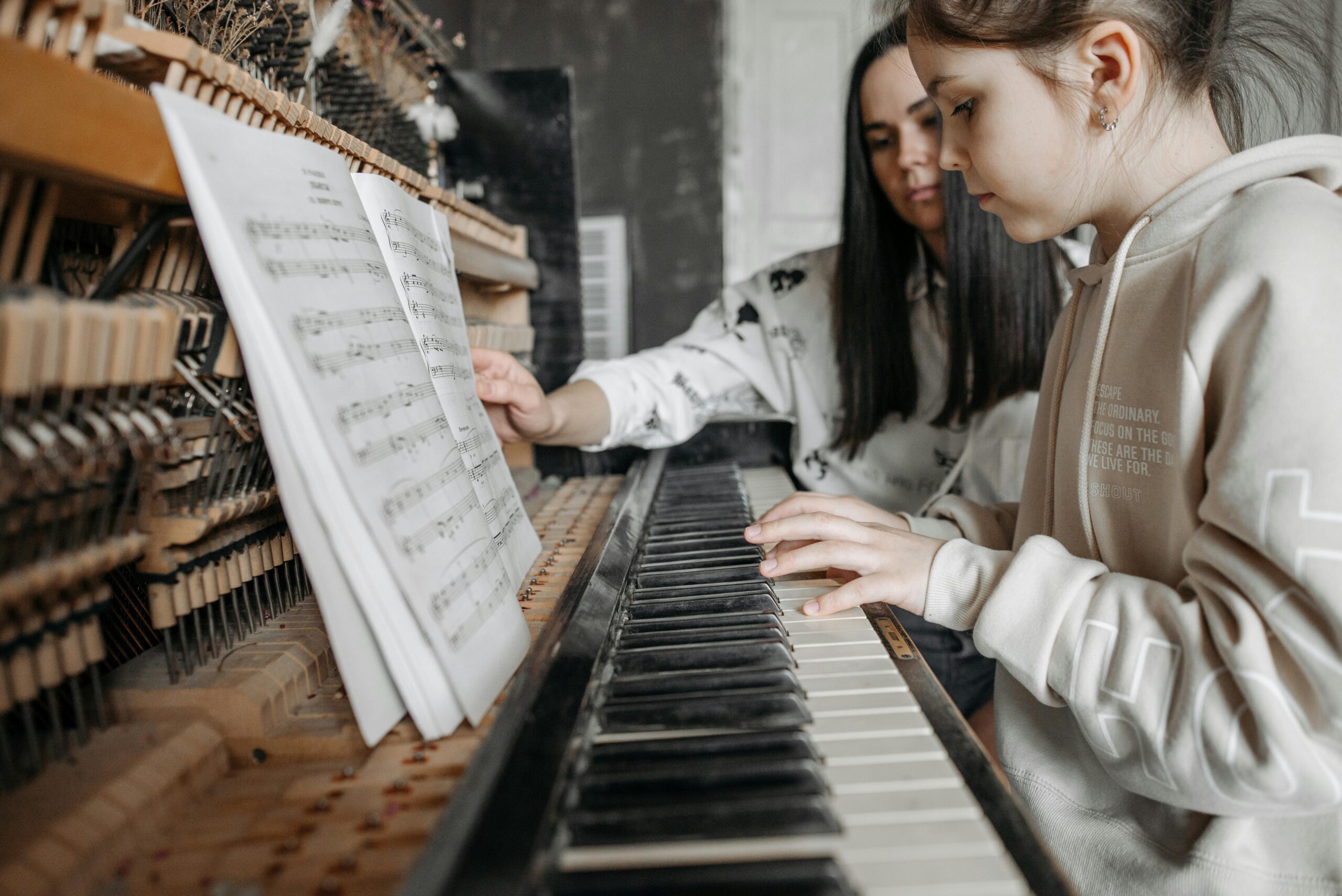
Your Musical Journey Begins Now 🌈
Learning piano represents a lifelong journey rather than a destination. Each practice session develops not just musical skills but discipline, patience, and artistic expression. The challenges you encounter strengthen problem-solving abilities and resilience applicable far beyond music.
Your first awkward attempts at coordinating both hands will transform into fluid, expressive playing through consistent practice and patience. The pieces that seem impossibly difficult today will become comfortable repertoire you play effortlessly in the future.
Start today with whatever instrument you have access to, whether a full grand piano or a simple keyboard. Download learning apps, find beginner tutorials, or schedule your first lesson. The perfect moment to begin doesn’t exist—the only moment is now.
Every master pianist started exactly where you are now, struggling with basic coordination and note reading. What separated those who achieved their musical dreams from those who gave up wasn’t innate talent but simple persistence through challenges. Your musical potential awaits discovery through the commitment to regular practice and continuous learning.
The piano bench calls you to a journey of discovery, expression, and growth. Answer that call, and let the music within you find its voice through the beautiful complexity of the piano keyboard. Your transformation from beginner to accomplished pianist begins with a single note, a single practice session, a single moment of commitment. Make today that moment. 🎹✨
